In case you missed it, the upcoming SBC Summit Latinoamérica will feature an exclusive keynote address by renowned 2024 IMSA SportsCar Championship driver Tatiana Calderón.
Following in the footsteps of legends like Lewis Hamilton, Chase Elliott, Jenson Button, Richard Petty, and Michèle Mouton, Tatiana Calderón is redefining motorsports. She has become the first woman to ever stand on a World Series 3.5 podium and to win the North American karting title, showcasing the success of women in a sport traditionally viewed as male-dominated.
Taking place at the Seminole Hard Rock Hotel & Casino from October 29-31, Calderón’s keynote will kick off the ‘Leaders’ conference track, offering 4,000 industry professionals insights into how data-driven collaborations between brands and female racing drivers are reshaping the motorsport landscape.
As we edge ever close to the big day, we thought it would be the perfect time to explore the life of Tatiana Calderón—sharing her humble beginnings, her rise to becoming a professional motorsports star, and how she served as a source of inspiration for a generation of female motorsport drivers.
This blog post will also provide essential context on the intriguing relationship between motorsports and the sports betting industry. We’ll examine the unique segmented structure of motorsports, highlight the leading associations, and explore regional and player preferences for viewing and betting on motorsports.
Tatiana Calderón: Poll Position For Success
Tatiana Calderón, a native of Bogotá, Colombia, developed her passion for driving at a young age, first experiencing driving at four years old while sitting on her father’s lap. She was introduced to racing by her older sister, and future manager, Paula at age nine, starting with go-karts at a rental track near their home. Despite her parents’ initial reluctance, Calderón received a red go-kart at age 10, fueling her ambition to race professionally. Her father also taught her about the mechanics of racing, further deepening her interest.
In 2005, at just 12 years old, Calderón competed in the EasyKart National Championship and became the first woman to win a Colombian National Karting title. She followed this success by finishing as a runner-up in the 2006 EasyKart National Championship, securing third in the Stars of Karting East Division, and winning the Rotax Junior Division title in the Colombian Kart Championship. By 2008, she had become the first woman to win both the Snap-On Stars of Karting Divisional Championship-JICA Eastern Championship and the IAME International Challenge series, marking her as the first woman champion of a national American karting series.
At 14, Calderón transitioned to sports cars, purchasing a Kia Picanto in 2009 and finishing second in the Radical European Master Series – SR5 with one victory and ten podiums. She then competed in the Star Mazda Championship with Juncos Racing, finishing tenth in her first season and improving to sixth in her second season, during which she also won the Colombian Rotax Championship.
In 2011, Calderón joined the Derek Daly Academy, with a desire to transition to more powerful cars, while also continuing with Juncos Racing. She made history as the first woman to podium in the Star Mazda Championship and debuted in Formula 3 in the European F3 Open Championship. Over the next few years, Calderón competed in various F3 series and other championships, including the 6 Hours of Bogotá in 2012, where her team finished third overall and second in class, and the MRF Challenge Formula 2000, where she finished second in the series.
At 21, Calderón became the first woman since 1983 to compete in the prestigious F3 Macau GP, finishing 13th. She then progressed to GP3, achieving a third-place finish at the Red Bull Ring in 2016 and securing her best championship finish of 16th in her final season. During this time, she joined the Sauber F1 Academy and began simulator testing with the team.
In 2019, Calderón became the first and only woman to compete in the FIA Formula 2 Series, where she also became the first woman to lead an F2 race during the Baku Feature Race. Her performance in 2019 led to further opportunities, including participation in the Porsche Super Cup and Japanese Super Formula.
Calderón transitioned to endurance racing in 2020, competing in the 24 Hours of Daytona and the European Le Mans Series (ELMS) before joining the World Endurance Championship (WEC) in 2021 with Richard Mille Racing. She finished 17th in the LMP2 Drivers’ Championship and also competed in the Super Formula Championship. In 2023, she raced for Team Virage in the ELMS, finishing 16th in the LMP2 Pro/Am Drivers’ Championship. In 2024, she signed with Gradient Racing to compete in the North American Endurance Cup.
Tatiana Calderón will deliver the opening keynote address at SBC Summit Latinoamérica as part of the ‘Leaders’ track on Wednesday, October 30th. She will be joined by Alvaro Melendez (Co-founder of CRANT) and Lina Silva (CEO of Wandr Studio). The panel will explore how AI is revolutionizing brand analytics, fan engagement, and sponsorship strategies. Additionally, discussions will focus on leveraging these partnerships for maximum impact and accelerating brand success both on and off the track.
Professional Racing: Understanding the Globally Segmented Sport
For most sports fans, following their favorite player is relatively straightforward. The player joins a team within an established league, and while they might also compete in additional competitions like the Champions League, or international tournaments such as the Copa America, they generally play for the same club within the same league for the season.
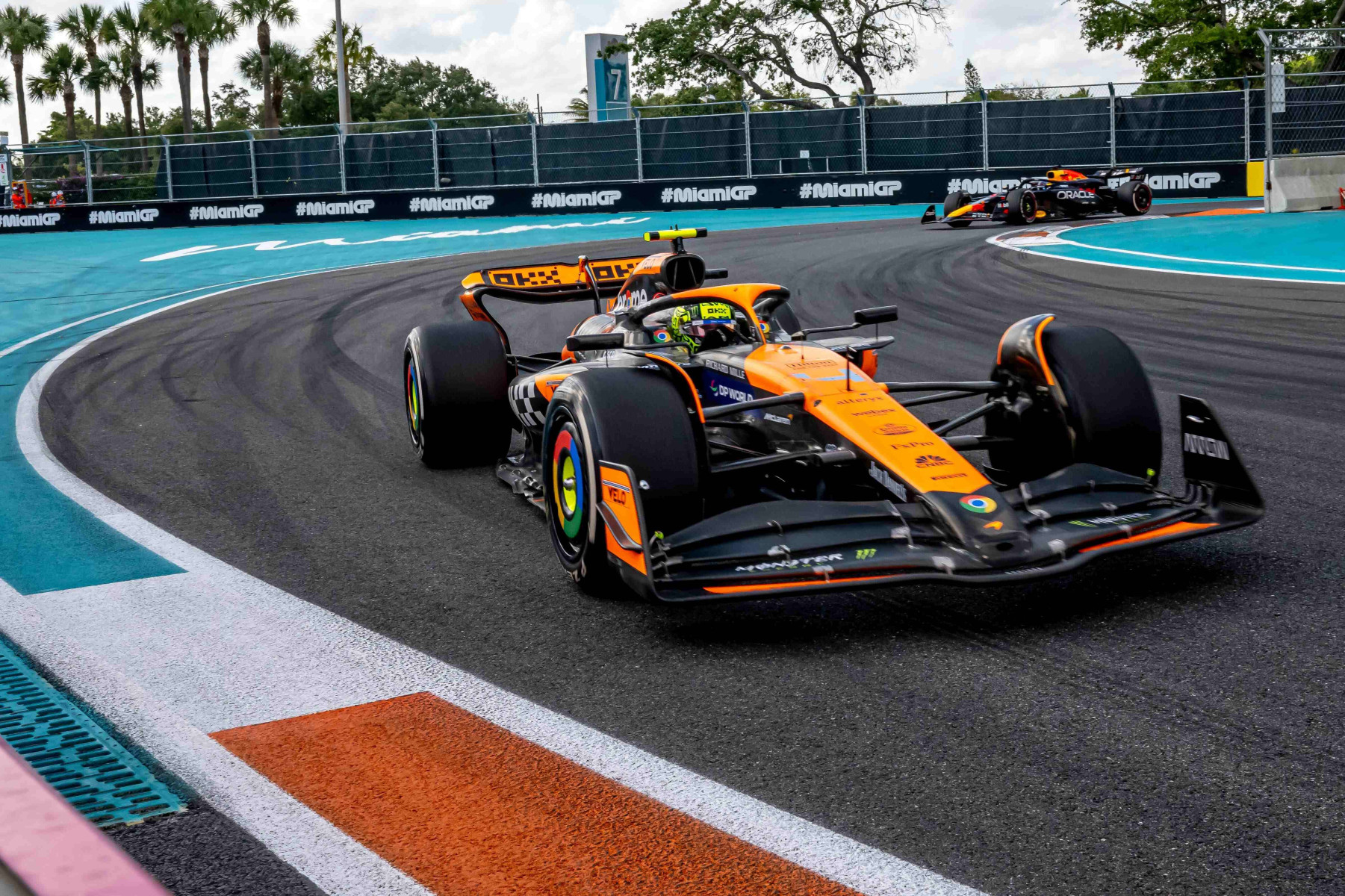
In contrast, motorsports offer a more complex landscape with a wide variety of racing formats and vehicle types. Fans can choose from numerous series, including Formula 1, IndyCar, Formula E, Formula 2, Formula 3, sports car racing, NASCAR, drag racing, and rallying. Compounding this complexity is the fact that drivers can participate in multiple types of races within the same season, further diversifying their competitive schedule.
For example, from the years 2019 – 2020, Tatiana Calderón competed in the FIA Formula 2 Series, Porsche Super Cup, Japanese Super Formula, the 24 Hours of Daytona, and the European Le Mans Series (ELMS). Crossing vehicle class, continent and series type.
To help clarify this complex tapestry of motor racing forms, here is an overview of the four most common racing forms:
Formula Racing
Formula 1 is the pinnacle of motorsport, showcasing the fastest cars, the most talented drivers, and the world’s most prestigious races. With cutting-edge technology and speeds over 200 mph, it offers an unmatched adrenaline rush. Formula 2 serves as a crucial stepping stone, where emerging talent races slightly less powerful cars, often producing future F1 stars. Formula 3, the gateway to international racing, hones raw talent, preparing drivers for the challenges ahead as they climb toward the top of the motorsport world.
Rally Racing
Rally racing occurs on a range of surfaces, from gravel and tarmac to snow, pushing drivers to navigate diverse terrain and unpredictable conditions. Prestigious tournaments like the World Rally Championship (WRC) and the Dakar Rally exemplify the sport’s unique mix of speed, skill, and strategy, making it a true test of endurance and adaptability.
NASCAR
NASCAR is renowned for high-speed oval racing, where drivers battle wheel-to-wheel at speeds often exceeding 200 mph. Notorious events like the Daytona 500 and the Coca-Cola 600 highlight the sport’s intense competition and thrilling finishes. With its close-quarters racing and nail-biting finales, NASCAR delivers non-stop action and excitement to fans worldwide.
Endurance Racing
Endurance racing challenges both the durability of the cars and the stamina of the drivers, with events spanning from 6 to 24 hours or more. Iconic races like the 24 Hours of Le Mans and the gruelling Rolex 24 at Daytona highlight this ultimate test of human and machine.
Sports Betting and Professional Racing: A Complex Relationship
When you consider placing a bet, which sports typically come to mind?
Perhaps you’re eyeing an accumulator on the weekend’s Premier League matches, or maybe you’re thinking of hedging your bets on an upcoming horse race?
Regardless of your preference, it’s a well-known industry standard that the most popular regional sports tend to attract the largest bets.
However, one globally beloved sport that often doesn’t receive the same level of attention in sports betting as its counterparts, is professional motor racing.
From regional racing championships like NASCAR and IMSA to globally renowned events such as Formula 1, professional racing captivates millions of viewers every month. However, it often struggles to generate the same level of betting interest as sports like football, horse racing, or boxing.
Although there is no defining reason for motorsports’ smaller appeal in betting, there are several considerable factors that could contribute.
Longevity and Legacy of the Sport
If you analyze some of the most globally recognized sports, a common theme emerges: they have all been established for well over a century. Football’s modern origins date back to 1863, rugby was created in 1823, and records of golf stretch as far back as the 15th century. In contrast, motor racing forms such as Formula 1, established in 1950, and NASCAR, founded in 1948, are relatively young. This significant difference in history means that the most popular sports for betting enjoy a cultural advantage of at least 100 years.
As a result, it could be argued that motor racing has yet to fully embed itself in the cultural zeitgeist of sports betting. This relative youth, combined with its niche status, may contribute to the lower level of interest it generates from the general public and bettors compared to sports with a more established legacy.
Niche Sport
Adding to the sport’s challenge with longevity and legacy, motorsports have often been considered niche. A 2022 report indicated that around 38% of avid Formula 1 fans in the UK were aged 55 or older, while a 2019 report revealed that only 14% of its viewership was under 25, highlighting the sport’s limited appeal to younger audiences and its lack of widespread popularity.
However, Netflix played a crucial role in revitalizing Formula One and motorsport as a whole with its documentary series Drive to Survive. Since its debut in 2019, the series—now in its sixth season—has sparked a significant transformation in the fanbase. With 77% of new viewers falling into the 16 to 35 age group, Formula 1’s total fanbase is projected to exceed a billion, signalling a dramatic shift in the sport’s appeal.
With the emergence of this new fanbase, known for its extensive use of social media platforms and streaming services, specific motor racing formats like Formula 1 have been given a new lease on life. This fresh wave of enthusiasm has revitalized the sport, offering a promising outlook for its future in sports betting.
General Attendance
When attending motorsport events like the Grand Prix or the Daytona 500, one can’t help but notice the prominent presence of society’s upper echelons. Races such as the Silverstone Grand Prix are hotspots for Hollywood elites and high society. With F1 tickets ranging from £500 to £6,000, the stark difference in cost compared to other sports, such as football (where an away game ticket can be as low as £30), highlights the significant disparity in accessibility for the average sports fan.
This lack of accessibility for the general public, combined with the fact that most races are held at different tracks, regions, time zones and even countries, creates a noticeable disconnect between the average sports viewer and motorsport racing. Furthermore, the limited accessibility has a ripple effect on the number of bets placed on the sport. As racing becomes more niche due to its exclusivity, the average viewer becomes increasingly difficult to find.
Final Thoughts
The intricate relationship between sports betting and professional racing is shaped by various factors, from the sport’s relatively recent emergence compared to traditional favorites, to its niche appeal and exclusivity. While motorsports like Formula 1 and NASCAR captivate millions worldwide, their higher barriers to entry—both in terms of ticket prices and the complexity of following multiple racing formats—create a disconnect between the average sports fan and the betting world.
However, with initiatives like Netflix’s ‘Drive to Survive’ revitalising interest and drawing a younger, more diverse audience, there is potential for this gap to narrow. As motorsports continue to evolve, with increased accessibility and broader appeal, the betting landscape may shift, opening new opportunities for engagement. Ultimately, the future of sports betting in professional racing hinges on the sport’s ability to integrate more seamlessly into mainstream culture, attracting a wider range of fans and bettors alike.