If information is everywhere, what makes conference content worth travelling for? In the fourth article in a series written by SBC CEO and Founder Rasmus Sojmark, he looks at the difference between accessing information and learning from experience. He explores why context, first-hand lessons and different industry perspectives still matter, and how the right conference session can help businesses ask better questions, avoid costly mistakes and make stronger decisions.
There was a time when one of the main reasons people attended conferences was simply to access information.
If you wanted to understand a new market, hear about a piece of technology or find out what was happening with regulation, getting the right experts together in a room had enormous value because that knowledge wasn’t particularly easy to find elsewhere.
That’s obviously changed. Today you can read industry news instantly, download reports, watch interviews, listen to podcasts and join webinars without leaving your desk. Increasingly, you can ask AI to explain a complicated subject and get a pretty good answer in seconds.
So why fly to Lisbon and spend several hours sitting in conference sessions?
I think that’s a question every event organiser needs to take seriously. For me, the answer is that information is only part of what a good conference provides. What you’re really getting access to is experience.
I can read about a new regulation online. What I really want to hear is how an operator affected by it is preparing its business. I can read that companies are investing heavily in AI. I’m much more interested in hearing from someone who has actually implemented it, what they’ve learned and whether it’s delivering the results they expected.
And I can download a report about an emerging market, but listening to people who have spent years operating there gives me context that is much harder to find in a spreadsheet. That’s where conference content becomes commercially valuable.
Gaming companies are making significant decisions all the time. They’re deciding which markets to enter, which technologies to invest in, how to respond to regulation, where customer behaviour is heading and where the next opportunities might emerge.
Very few of those decisions have simple answers. But there are people across our industry who have already dealt with many of the same questions. That’s the knowledge I want on our stages.
This year, we’ll have more than 600 speakers across six stages at SBC Summit. That’s obviously a huge amount of content, but the number itself isn’t what interests me. What matters is the experience represented within it.
We have people who have built companies, entered difficult markets, launched products, dealt with regulators, adopted new technologies and occasionally made expensive mistakes along the way. Being able to learn from those experiences has real value.
Sometimes the most useful thing somebody can share on stage isn’t what worked. It’s what they wish they’d known twelve months earlier.
If you’re considering entering a particular jurisdiction and you hear three operators explain the challenges they encountered, that can influence the questions you ask before committing investment.
If you’re considering a major technology purchase, hearing how another business approached the same decision might save months of work. You don’t have to copy what somebody else did. Every company and every market is different. But you can learn from it.
That’s one of the things I’ve always liked about this industry. Despite being extremely competitive, people are remarkably willing to share knowledge when we bring them together. There is a recognition that many of the big challenges facing gaming aren’t challenges one company can solve alone.
Regulation is an obvious example. So is player protection. The impact of AI is another. Companies may compete commercially, but they can still learn from each other’s experience. That’s why the range of perspectives within the conference programme matters so much.
An operator will look at a problem differently from a supplier. A regulator brings another perspective. Someone who has spent twenty years in the industry sees things differently from a founder building their first gaming company. Put those experiences together and you start to get a much more complete picture.
I’m also a big believer in looking outside gaming. If we only ever invite people who have spent their entire careers in our industry, eventually we’re going to hear the same ideas coming back to us. Some of the most useful lessons can come from sport, technology, entertainment, finance or other sectors dealing with changes that gaming may encounter next.
That’s part of the role of our Super Stage. I’d love to tell you everything we have planned for it this year, but my marketing team has become increasingly good at stopping me from announcing things before they’re ready.
I’ve learned my lesson. Mostly.
What we’re trying to create across the entire conference programme is something that becomes increasingly difficult to find in an age of unlimited information: useful context. You can know what happened and still not know what it means for your business. That’s where hearing directly from people with experience matters.
A conference session might make you investigate a market you hadn’t considered. It might make you reconsider an investment, ask a better question of a supplier or simply confirm that the direction your company is already taking is the right one. Any one of those outcomes can have genuine commercial value.
That’s how I think we should judge conference ROI. Not by how many sessions you managed to squeeze into three days. Ask yourself whether anything you heard helped you make a better decision.
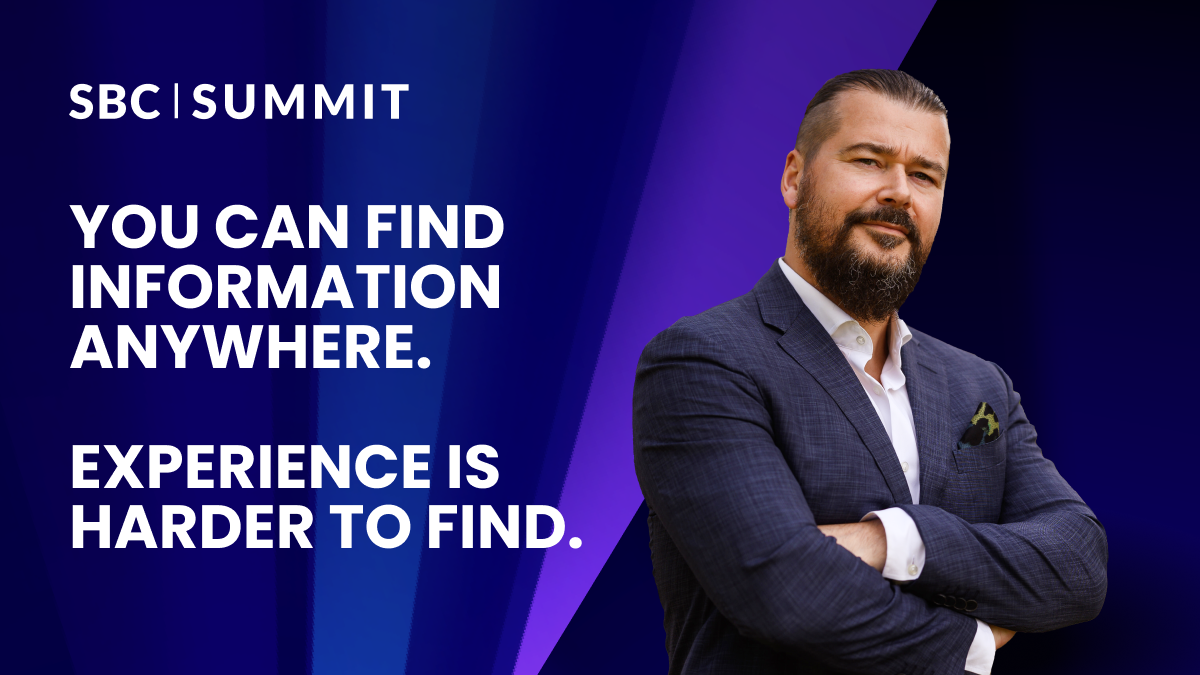
Because information has never been easier to find.
Experience is still considerably harder.