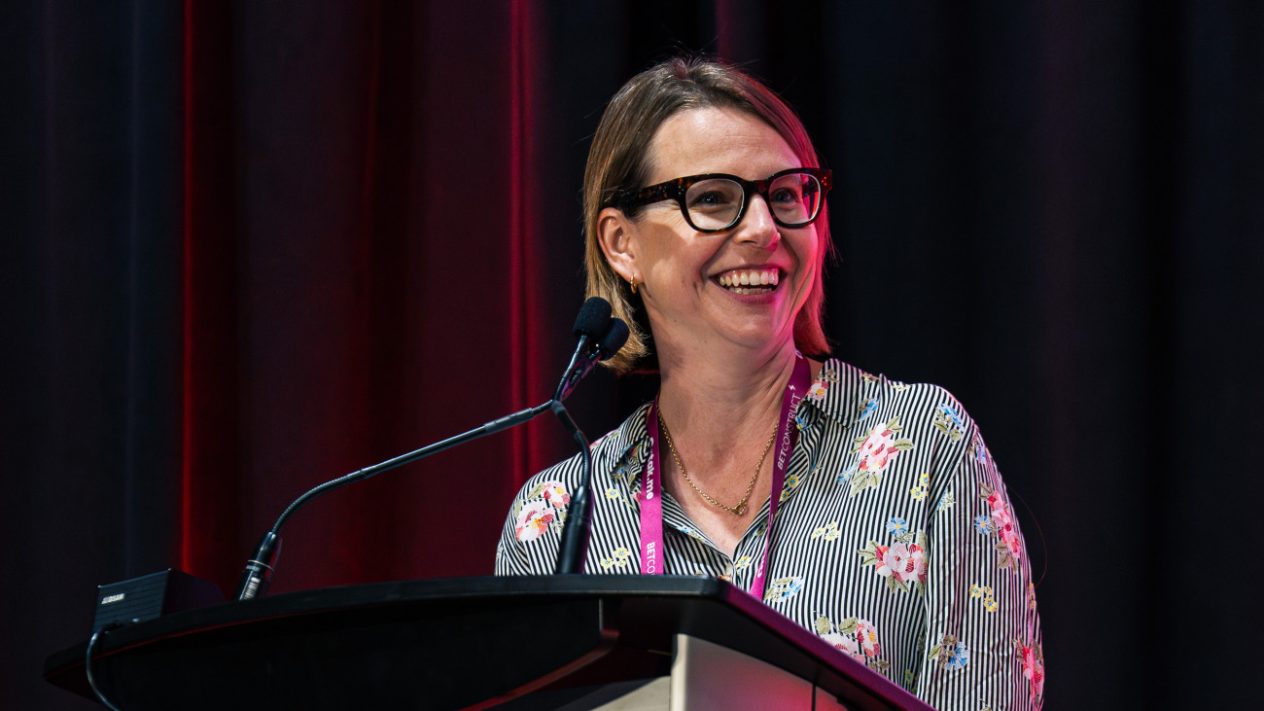
As Responsible Gambling Council (RGC) Chief Executive Officer, Sarah McCarthy plays a leading role in tackling player protection challenges and helping to shape a responsible future for the Canadian gaming industry.
Ahead of her speaking appearance at SBC Summit Canada 2026, we chatted with McCarthy about life since joining RGC in early 2025, and how she assesses the state of play in modern Canadian gambling.
Parts of this interview have been edited for length and clarity.
Canadian Gaming Business: You’ve now been in your role for more than a year. What are some of the biggest points of pride of your time at the organization so far?
Sarah McCarthy: It’s been a remarkable first year. Honestly, what stands out most is the excellence of the team at the Responsible Gambling Council. It’s such a deeply committed organization, and that’s clearly exemplified in our work towards our vision of a world where gambling never comes at a human cost.
Last year was very successful on multiple fronts. Our PlaySmart Centres reached more than 583,000 players, patrons, and venue staff. We launched multiple youth programs, including our Grade 11 and 12 student-athlete training pilot, Beyond the Game, with 92% of students reporting they gained new knowledge on how to access help. We deepened our community reach with Indigenous, South Asian, and Black communities across Ontario.
We’ve worked to strengthen our approaches to translating evidence into initiatives that regulators, operators, and decision-makers can actually use. Last year, we successfully completed 75 RG Check accreditations internationally, and our Advisory Services Team helped shape RG frameworks in Australia, the U.S., and around the world. We’ve continued to demonstrate that RGC’s independent, evidence-based approach is something the whole ecosystem values and trusts.
We also recently launched a new PSA targeting young adult males aged 19 to 24, and released an impact report that documents the results of Ontario’s Responsible Internet Gambling Fund (RIGF) and exemplifies what targeted, publicly funded gambling harm prevention can accomplish by providing critical balance to gambling marketing by promoting informed, responsible choices.
The Responsible Gambling Council is more than 40 years into this work and, if anything, the mission feels more urgent and relevant than ever.
CGB: How have your past working experiences informed and shaped the way you lead RGC?
McCarthy: I’m very grateful for the wonderful opportunities I’ve had over my career. In particular, working for nine years at the Rick Hansen Foundation (RHF) towards a vision of an inclusive world where people with disabilities are living to their full potential was profoundly meaningful in shaping my understanding of leadership and impact.
Throughout my career, I’ve had the opportunity to work with excellent leaders and have learned the importance of putting the team first. Collaboration, internally and externally, is key to addressing big issues. At RHF, I had the wonderful opportunity to lead the Rick Hansen Foundation Accessibility Certification (RHFAC) program, a national measurement and recognition tool for accessibility. Key to the success of that program was active collaboration with the commercial real estate industry, governments, organizations, communities and people with lived experience.
I’m definitely still learning! Effective leadership and meaningful impact require continuous growth, and I’m very committed to continual evidence-based learning as a key to the relevance of an organization. At the Responsible Gambling Council, we’ve been working to integrate evaluation techniques into all of our approaches to ensure our programs have measurable outcomes that directly address our strategic objectives. An agreed-upon transparent method of measurement and a shared understanding of “impact” provide an excellent platform for success.
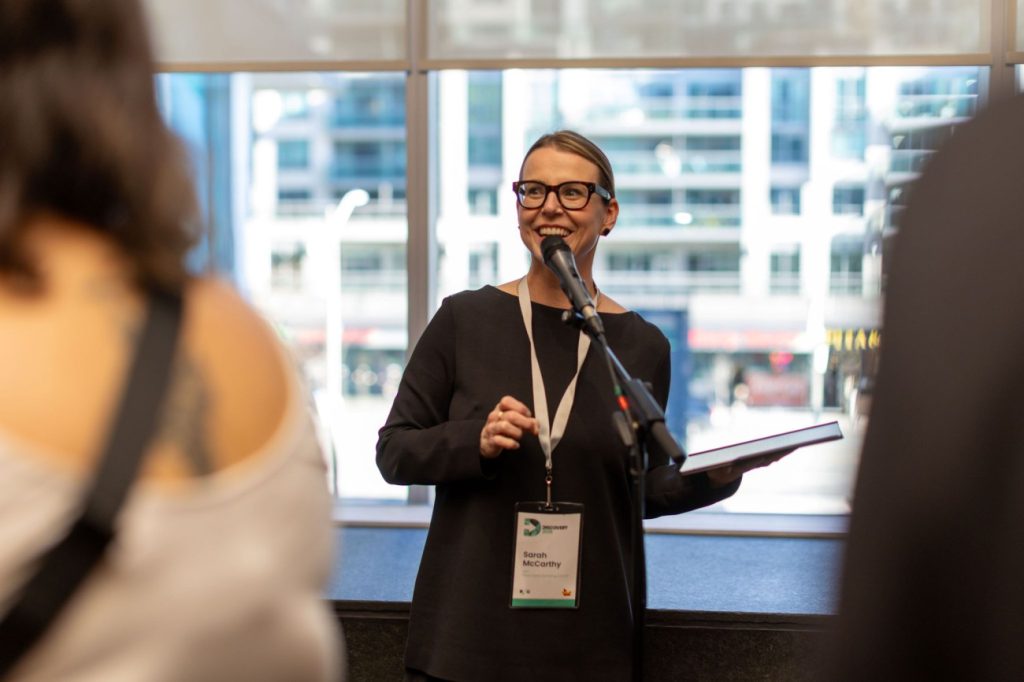
CGB: As someone coming into the gaming industry from elsewhere, what are some things that surprised you or stood out about the industry?
McCarthy: It’s been fascinating to learn about nuances and differences in approaches to licensing, markets, and regulations both nationally and internationally. I’m surprised that gambling harm prevention is still a niche topic outside of the sector – these are important themes that need to reach a wider audience.
I’ve been very impressed by the industry’s willingness to collaborate on difficult and complicated issues across so many parts of the broader ecosystem. It’s not just gambling operators stepping up; sports leagues, gaming manufacturers, financial institutions, and community organizations are all recognizing their role in preventing gambling harm. Seeing such a broad range of leaders come together for our Discovery conference every year is an excellent example of this collective commitment. It proves that people across the sector are ready to have substantive conversations to reduce the risks of gambling and protect players.
CGB: Canada has a long history of championing responsible gambling. As Ontario enters its fifth year of regulated iGaming and Alberta gears up to launch, what do you see as the biggest challenges ahead?
McCarthy: The gambling landscape is changing faster than ever, and the biggest challenge is ensuring that safeguards keep pace with innovation. As Ontario matures and Alberta prepares to launch, we need national support structures to provide a safe framework for players.
For the industry, the challenge is moving beyond compliance as a checkbox and viewing player wellbeing as a core pillar of business sustainability. For the Responsible Gambling Council, our challenge is to continue translating complex research into practical, “real-world” tools that actually support players. We want to make sure that as the footprint of gaming grows, the safety net grows with it. We’re looking forward to national approaches to harm prevention that go deeper, are grounded in evidence, and are built for the realities of a rapidly growing market.
The learnings from Ontario’s regulated iGaming environment are valuable; we want to see that knowledge shared and applied across the country as new markets like Alberta come online. That means investing in programs with demonstrated outcomes, applying consistent standards like RG Checkacross jurisdictions, and ensuring diverse communities are not left behind as gambling becomes more accessible.
Prevention cannot be an afterthought. It has to be designed in from the beginning, and that requires national coordination, sustained funding, and a shared commitment to player wellbeing.
CGB: Alberta has made RG Check a requirement, as Ontario did. Can you sum up the mission statement of that accreditation program, and what the response from commercial operators has been like?
McCarthy: RG Check is an independent, international recognized accreditation program that evaluates the strength of a gambling operator’s responsible gambling framework across a comprehensive set of standards, covering everything from player protection tools and staff training to responsible marketing practices. The mission is simple: to provide an independent, rigorous, and evidence-based ‘gold standard’ that ensures gambling operators are doing everything possible to protect their players. It’s about taking the guesswork out of harm prevention.
Overall, the response from commercial operators has been positive. Many even see it as a competitive advantage. It’s a trust signal. Operators want to show their players, and their stakeholders, that they are deeply committed to creating sustainable, safer gambling spaces. They appreciate the clarity and the roadmap for improvement that the accreditation process provides.
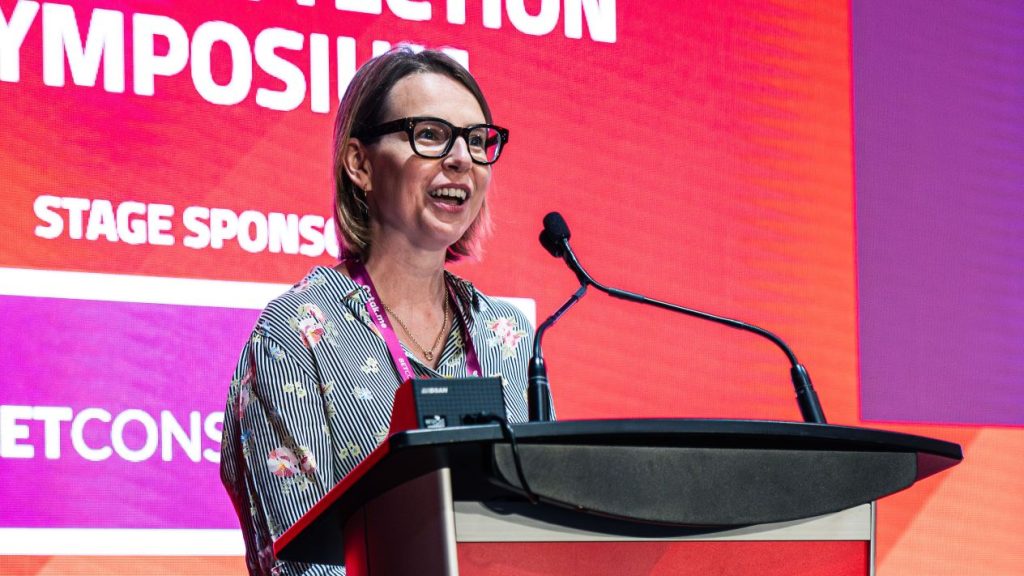
CGB: Canada has a rich charitable gaming, the topic of your SBC Summit Canada panel. Where do you see that sector heading in the next few years?
McCarthy: cGaming is the heartbeat of many communities, and it’s in the middle of a significant digital transformation. The key will be ensuring that as these platforms evolve and become more accessible, the human-centred safeguards we talk about in iGaming are integrated from the start. We saw a promising
example of this last year with the introduction of the first PlaySmart Centre at a cGaming venue. That milestone reflects a growing recognition that player support needs to be embedded in the gaming environment itself, not treated as an afterthought. After the success of that first location, we expect to see that model expand further.
Charitable gaming has a unique social license and protecting that means staying ahead of the curve on player protection and harm prevention.
CGB: Other than your panel, what will you be talking about and listening to at SBC Summit Canada this year?
McCarthy: I’m particularly interested in conversations around AI and data-driven prevention. We’re always looking for ingenious ways to use data to spot early signs of harm, and SBC Summit Canada is giving me the opportunity to dig into exactly these kinds of questions.
On the charitable gaming panel I’m chairing, we’ll be bringing together leaders from across the sector to explore how the industry is raising the bar on player protection. We know that gambling harm doesn’t affect every community the same way, so I’m eager to hear how others are tailoring their player protection strategies to be more inclusive and culturally relevant. I’m always looking for those moments where we can bring different perspectives together to ensure gambling never comes at a human cost.
Responsible Gambling Council CEO Sarah McCarthy will be speaking at SBC Summit Canada on May 21 on a panel titled ‘Giving back: The latest and greatest in charitable gaming‘.
To catch this panel, along with the full conference program and everything else that SBC Summit Canada has to offer, secure your ticket here. Affiliates and operators qualify for complimentary passes.
Source: https://www.canadiangamingbusiness.com/2026/05/06/responsible-gambling-council-sarah-mccarthy-interview/