From shirt sponsors to on-pitch advertisements, betting brands have played an integral part in the fabric of Brazilian football for decades.
However, the market’s new regulatory framework, established in Law 14.790 and the introduction of the SPA licensing regime have brought about a new era of football sponsorship. One defined by stricter oversight, accountability, and an end to the “anything goes” attitude that once defined the market.
In the past year, this new regulation has led to several major sponsorships being paused, celebrity campaigns re-evaluated, and clubs pushed to reassess how and who they partner with.
The result? A complete shake-up in the business of Brazilian sponsorship, and the betting industry’s biggest marketing playground.
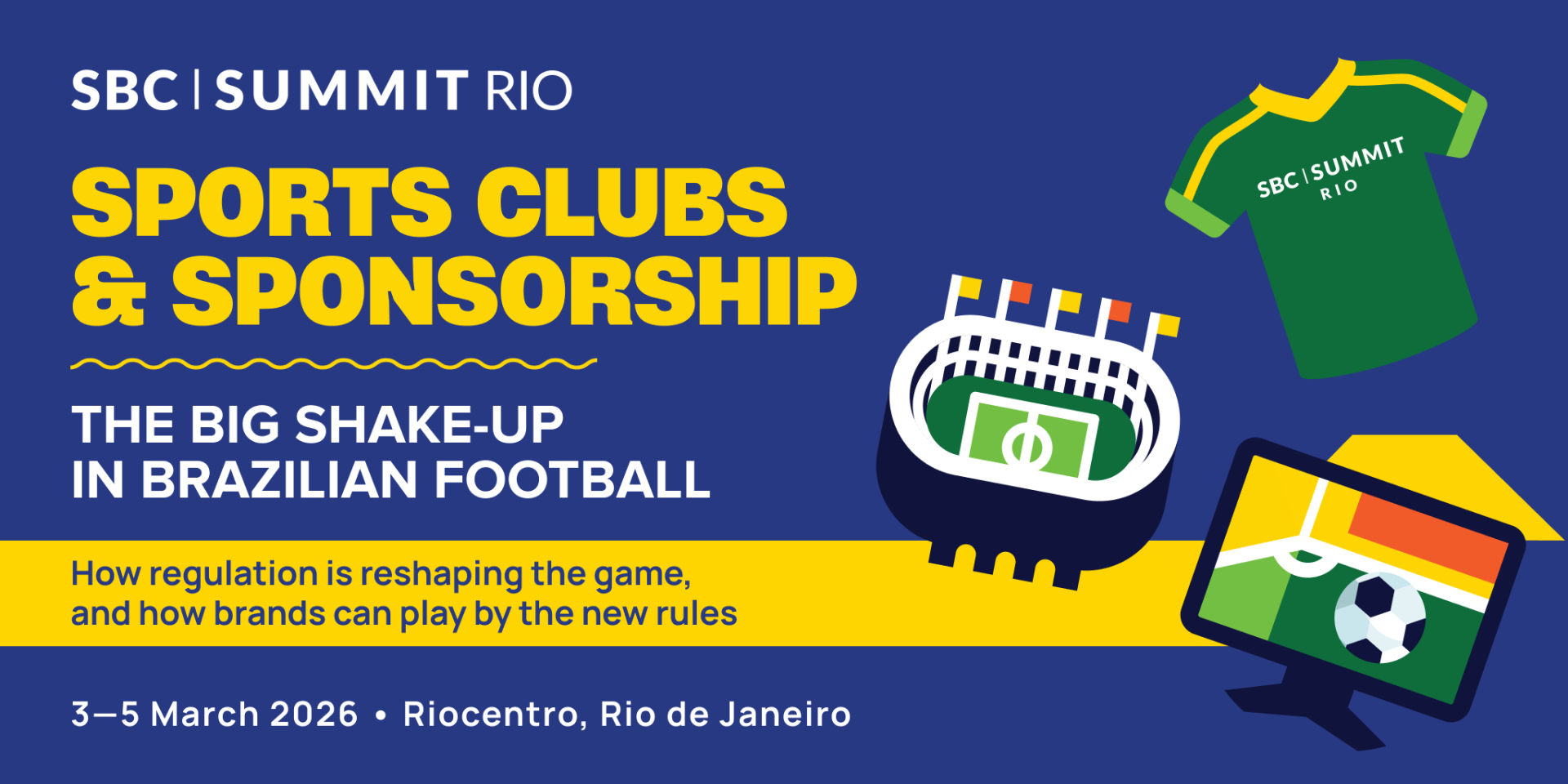
Ahead of SBC Summit Rio, we detail what led to Brazil’s sponsorship overhaul, the impact of key regulations like Law 14.790 and how the event will help operators master this new sponsorship landscape.
Before Regulation: Brazilian Football’s Wild West
Long before Brazil’s gambling market was officially regulated in 2023, betting was already woven into the fabric of everyday life. Despite operating in a legal grey area, the industry generated an estimated R$120 billion (US$21.17 billion) that year alone.
However, the lack of regulation meant no restrictions, no transparency, and no legal responsibility for either sports clubs or betting brands. Offshore operators freely advertised, sponsored clubs, and promoted themselves without oversight or consumer protection requirements.
In short, it was the Wild West of sports sponsorships; high visibility, zero accountability, and profits that were rarely funnelled back into the Brazilian economy.
Then came Law No. 13.756 in 2018, signed by then-President Michel Temer, which laid the groundwork for change, even if it took years to materialise.
2018–2025: Brazil’s Long & Winding Road to Regulation
Brazil’s journey to regulation was anything but smooth, marked by delays, year-long political disagreements and worries around player safety.
Although first proposed in 2018, it would take five years for the wheels of regulation to finally spin. Here is a brief snapshot of how Brazil finally reached full regulation.
- Dec 2018 – Law No. 13.756 enacted: Brazil legalises fixed-odds sports betting, allowing the Ministry of Finance to create a regulatory framework.
- 2019–2023 – Missed deadlines: Successive governments fail to create a regulatory framework, allowing foreign operators to continue flooding the market.
- Dec 2023 – Law No. 14.790 sanctioned: Brazil finally regulates sports betting and iGaming, creating a licensing and tax system under the new Secretariat of Prizes and Bets (SPA), a division of the Ministry of Finance..
- Jan 2024 – SPA established: Decree No. 11.907/2024 formally established the SPA and gave it full control over licensing, compliance, and supervision.
- Feb–Aug 2024 – Implementation ordinances: The SPA publishes a wave of ordinances, covering everything from advertising and sponsorship rules to stricter responsible gaming and anti-money laundering measures, as well as Portaria No. 827/2024, the key licensing regulation for operators.
- Dec 2024 – Licensing window closes: Active operators had to secure an SPA license by the end of the year to continue operating legally. Each license lasts five years and covers up to three betting brands.
- Jan 2025 – Market goes live: The regulated market officially goes live, meaning only SPA-authorised operators can now advertise, sponsor teams, or offer betting services in Brazil.
How Regulation Reshaped Sports Sponsorship
Before regulation took effect, betting companies dominated the Brazilian sponsorship landscape, accounting for 75% of master sponsorships across the 20 Série A clubs, and contributing an estimated R$1.4 billion in commercial revenue.
Backed by extensive marketing campaigns and celebrity ambassadorships, sports sponsorships were at an all-time high, becoming an essential driver of brand visibility and commercial growth for both betting operators and clubs alike.
In 2025, when the SPA began enforcing its rules, the sponsorship landscape witnessed an unprecedented shake-up. Clubs and brands suddenly had to pause or renegotiate deals, rethink marketing campaigns and in some cases, walk away entirely from sponsorship deals to ensure compliance.
Several months on, as the dust begins to settle, the status quo is returning. Both clubs and operators are adapting to the new framework, and the future of Brazilian sports sponsorships is beginning to look bright once again.
Here’s how sponsorships have evolved under the new system:
From Open Season to Licensed Exclusivity
From January 2025 onward, only operators holding an SPA license are authorised to sponsor, advertise, or promote betting activities in Brazil. Football clubs are barred from working with unlicensed or pending-license operators, while the Brazilian Football Confederation (CBF) has instructed leagues to suspend existing non-compliant deals.
This regulatory shift prompted a wave of sponsorship cancellations and contract renegotiations across the market — affecting major football clubs and regional tournaments alike — serving as a clear reminder that compliance must now take precedence over profit.
Yet, despite the disruption, the transition has been both swift and relatively seamless, reflecting the industry’s collective commitment to responsible growth. As of mid-2025, Brazil counts 65 licensed operators running 171 brands, with every Série A club now having at least one regulated betting partner, providing operators and clubs with a clear path for both compliance and success.
Key regulatory requirements:
- Only operators licensed by the SPA can legally advertise, sponsor, or promote in Brazil.
- Clubs are prohibited from partnering with unlicensed or pending-license operators.
- In March 2024, the CBF formally instructed clubs and leagues to suspend deals with non-authorised betting brands.
Together, these reforms mark the beginning of a more credible and accountable sponsorship landscape — one that prizes compliance as much as creativity. The challenge now is how to keep that creativity alive within a regulated framework.
At SBC Summit Rio, industry leaders will delve into precisely that — how betting brands can authentically embed themselves in major sporting leagues and cultural moments while upholding social responsibility.
Featured on the Marketing track, the panel ‘‘From Stadiums to Samba: How Authenticity is Redefining Big Event Sponsorship” will unpack the fine line between creative marketing and compliance, while exploring new sponsorship frontiers in Samba School Parades, Carnival groups, and other uniquely Brazilian cultural experiences.
Advertising Gets a Reality Check
For decades, the football experience has been defined by its association with gambling brands.
Logos are scattered across club kits, stadiums, and pitch advertisements as well as social media posts, celebrity endorsements, and endless ad placements. For football fans, betting advertisements were a natural feature of the sport, but in Brazil’s unregulated market, many began to feel the lines between betting, entertainment and sports blur.
In an effort to better protect younger audiences from the ‘glamorisation’ of gambling, any betting advertisements, from shirt branding to Instagram posts, would now fall under SPA and CONAR Annex X guidelines.
For operators and sports clubs, this means:
- Ads can’t target minors or promote gambling as a route to wealth.
- Responsible gambling messages and age warnings are mandatory.
- Clubs must submit ad materials for review if requested by regulators.
For both operators and clubs, this adds a new layer of accountability. Sponsorships are no longer just about brand exposure; they’re about maintaining compliance and ensuring authenticity with their audience.
To aid stakeholders in navigating these changes, SBC Summit Rio will feature the session ‘Sports Clubs Edition: Playing by the New Sponsorship Rules’, as part of the Marketing track. The panel will bring together industry experts to discuss practical approaches to Brazil’s new sponsorship regulations, sharing insights on how to design marketing campaigns that balance compliance, creativity, and fan engagement, ensuring partnerships remain both profitable and future-proof.
Celebrity and influencer marketing curtailed
Another significant shift within Brazil’s new regulatory framework is the crackdown on influencer and celebrity involvement in gambling promotion.
For years, social influencers and celebrity ambassadors have been a defining feature of the global betting ecosystem. Big names like Luís Figo and Cristiano Ronaldo helped brands achieve instant visibility and credibility, turning star power into financial and commercial success.
However, as the competition for celebrity partnerships grew, so did concerns around its appeal to minors and content that could “unduly encourage gambling.”
In response to these fears, policymakers are now pushing for tighter regulations on celebrity endorsements, including proposals to ban active players, coaches, and anyone under 18 from appearing in gambling advertisements. The goal is now to curb the “gambling glamour” that once blurred the line between fandom and promotion, and to establish a safer, more responsible marketing environment that prioritises the protection of younger audiences.
At SBC Summit Rio, industry leaders will delve into the effects of Brazil’s new regulations on influencer and celebrity advertising during the session ‘Red Card for Football Sponsorships and Celebrity Endorsements’. Featured as part of the Affiliate Leaders Summit, the session will bring together affiliate and marketing experts to discuss how brands can navigate these restrictions, stay compliant, and still deliver impactful, engaging marketing campaigns.
Clubs Now Share the Compliance Burden
In this new era of regulation, football clubs can’t just take the cheque and move on. They’re now jointly responsible for making sure their betting partners are properly licensed and compliant with SPA standards.
Under the new rules, every sponsorship contract has to be filed with the SPA, and violations can result in fines, ad removals, or even license suspensions. In short, compliance isn’t just the operator’s problem anymore; it’s everyone’s.
We’ve already seen this new reality take shape in early 2025, with major teams like Santos FC, Atlético Mineiro and Flamengo restructuring their sponsorship agreements — a clear sign that clubs are becoming more selective and strategic in choosing their partners.
This extra layer of due diligence has transformed the sponsorship landscape into one that’s more transparent, balanced, and collaborative. Clubs are no longer passive recipients of sponsorship cash; they’re active partners in keeping the industry clean, credible, and built on stronger, more sustainable relationships.
What This Means Moving Forward
Brazil’s football sponsorship landscape has matured fast and shows no sign of slowing. While some may view the move from an unregulated to a licensed market as restrictive, it has ultimately created a healthier, more sustainable environment for all involved.
Operators now have to think beyond branding and exposure. Partnerships must align with integrity, compliance, and social responsibility, values that fans, regulators, and clubs increasingly demand.
Get Your Tickets to SBC Summit Rio:
Secure your spot at SBC Summit Rio with our exclusive ‘Early Bird’ ticket offer! For just R$1500, you’ll gain access to three days of networking, conference, and exhibition.
Want an Expo+ Pass? It’s yours for R$500.
Just interested in the show floor? Purchase our Expo-Only Pass for free!
If you are an operator or affiliate, you can apply for a free pass! Operators can apply for a complimentary pass here. Affiliates can apply for complimentary passes here.
For exhibition/sponsorship opportunities, contact [email protected]
Want to speak at the event? Contact our conference gurus Aidan Brain ([email protected]) and Sofia Pinto ([email protected] ).