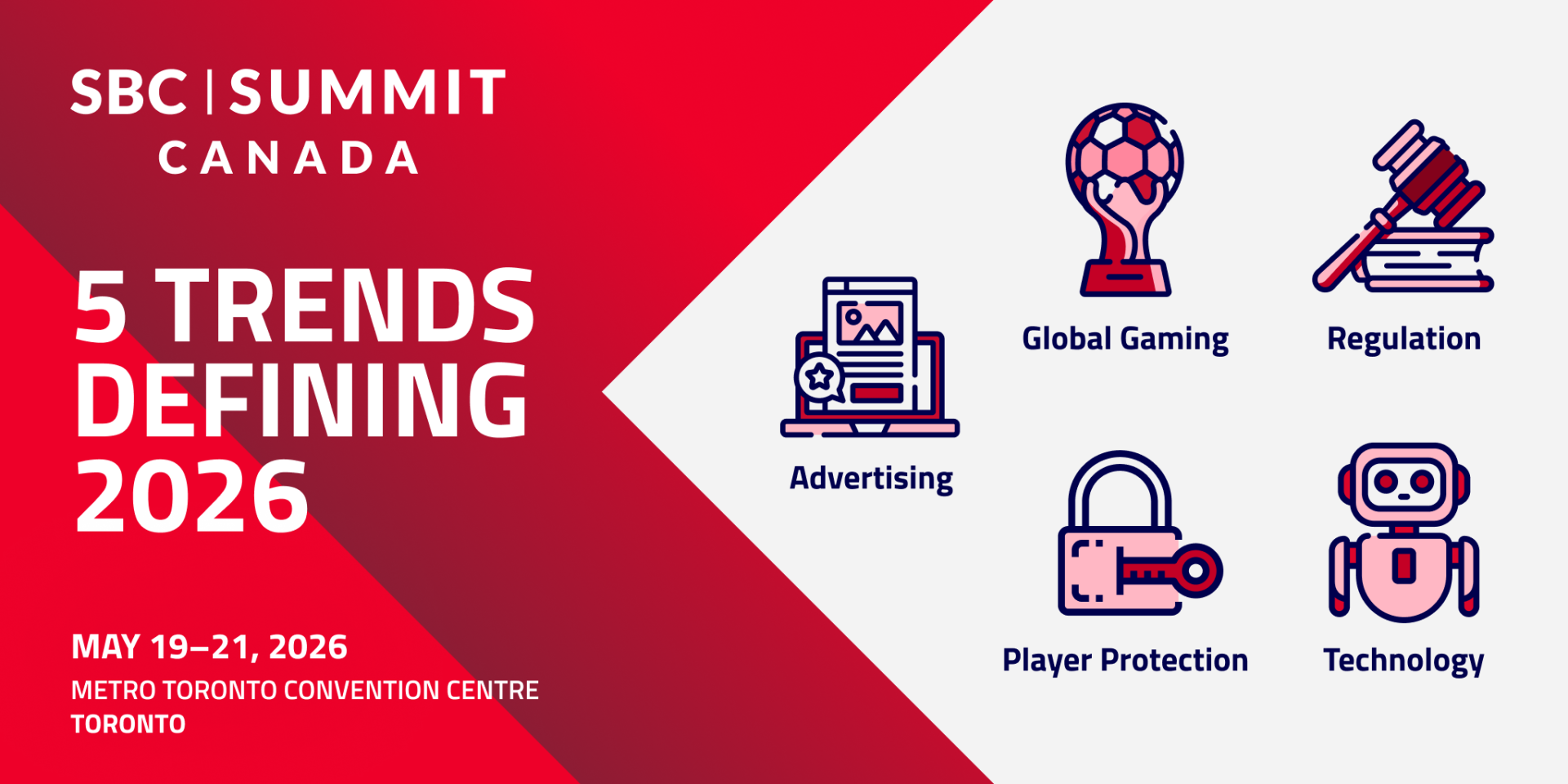
2026 is shaping up to be a landmark year for Canada’s gaming industry, with several major developments on the horizon.
The most immediate is Alberta’s market launch on 13 July, making it just the second regulated province after Ontario. Beyond Alberta, however, a number of key trends are emerging that are set to influence the direction of the country’s gaming industry for years to come.
This blog looks at:
- The regulatory decisions driving national impact
- The growing scrutiny on advertising and affiliation
- The shift toward more embedded approaches to player protection
- The dual role of technology in creating both risk and opportunity
- The increasing globalisation of Canada’s gaming ecosystem
Regulation is Becoming National in Impact, Even if it Remains Provincial
Canada will remain a provincially regulated market. However, the decisions being made at a provincial level are increasingly setting precedents that resonate nationally.
Issues around advertising, player protection, and grey-market exposure are no longer isolated to individual jurisdictions. Developments such as Alberta’s market launch, alongside ongoing discussions around national self-exclusion frameworks, are shaping expectations across the entire country.
Why this matters: The industry can no longer afford to treat compliance as a patchwork exercise. As scrutiny increases across provinces, operators that anticipate broader regulatory alignment will be better positioned to compete.
Panels Exploring These Themes:
- Alberta: The New Sheriff in Town
- Is a Centralized Self-Exclusion Tool Necessary for Responsible Gambling in Canada’s iGaming Industry?
- Fragmented Rules, Hidden Risks: Tackling Grey-Market Gambling in Canada
Advertising and Affiliation Are Under Pressure, but Not Disappearing
How operators and affiliates can advertise in Canada may be about to change. Bill S-211 proposes the introduction of a national framework for gambling advertising and is set to be debated in the House of Commons after being approved by the Canadian Senate.
While the details are not yet finalised, the bill signals a move toward tighter controls on gambling advertising, including greater restrictions around exposure and the use of celebrity endorsements.
Alongside potential regulatory changes, the industry itself is working to raise standards. The Canadian Gaming Association has introduced a Code for Responsible Gaming, setting clearer expectations around responsible advertising practices. While the Code strengthens accountability among licensed operators and affiliates, its industry-led nature means enforcement against grey and black market operators remains limited.
At the same time, platform-level enforcement is evolving. Changes to compliance requirements from companies such as Google and Meta mean operators and affiliates must take a more structured, compliance-led approach to campaign planning. Licence verification, messaging standards, and ongoing monitoring are becoming increasingly important to maintaining access across both paid and organic channels.
Sessions such as Brick by Brick: The construction of a new affiliate landscape will allow delegates to get a clear understanding of the new rules of engagement. Attendees will learn how to operate within a more complex environment while protecting long-term ROI through compliant and sustainable strategies.
Other sessions will examine how operators and affiliates can diversify beyond traditional channels such as search and Google Ads, by investing in platforms like Instagram, TikTok, X, and live streaming to reach new audiences. These discussions will focus on how to do so in a way that is both engaging for players and aligned with platform policies, Canadian regulations, and industry standards.
Why this matters: Advertising and affiliation remain essential routes to acquisition in Canada, but they are facing increasing scrutiny. As national discussions, provincial rules, and platform policies continue to evolve, success will depend on how effectively operators navigate this complex and shifting landscape.
Panels Exploring These Themes:
- Setting the standard: Will the Code for Responsible Gaming bring success to Canadian advertising?
- The Rise of Platform Restrictions: How Platform Rules are Reshaping Gambling Advertising
- Chasing the trend: Utilising social media for new players
Player Protection is Moving from Policy to Infrastructure
One of the key trends at SBC Summit Canada this year is how technology is beginning to embed player protection more directly into operator systems, rather than treating it purely as a compliance requirement.
Tools such as behavioural analytics and AI-driven risk detection are enabling earlier intervention and more proactive safeguards. At the same time, discussions around the potential development of centralised self-exclusion systems highlight a broader shift toward more integrated approaches to player protection.
With provinces such as Alberta following Ontario in opening their markets, embedding protection into core systems is becoming increasingly important for long-term sustainability.
This focus sits at the centre of the Player Protection Symposium on day two of SBC Summit Canada, where speakers will examine how technology-led protection is being designed and implemented across Canadian gaming. Discussions will explore how these tools can help address gaps created by regulatory fragmentation, what can be learned from past compliance failures, and how the industry can move toward greater alignment on player protection standards.
Why this matters: Regulatory fragmentation can create inconsistencies in player protection. These gaps can be exploited by grey and black market operators. Strengthening coordination and raising standards among licensed operators will be key to improving safeguards and supporting the sustainable growth of Canada’s regulated market as more provinces consider opening up.
Panels Exploring These Themes:
- Beyond Regulation: Understanding Who’s Most at Risk in Canada’s Evolving Gambling Market
- Fragmented Rules, Hidden Risks: Tackling Grey-Market Gambling in Canada
- Upholding Player Protection: Learning from those Established in Canada
Technology is Reshaping both Risk and Opportunity
As Canada’s gaming market evolves, technology is expanding both the opportunities available to operators and the risks they must manage. Advanced payment systems are enabling faster deposits and withdrawals, but they also introduce greater exposure to AML risks, fraud, and player protection challenges.
These topics will shape conversations across SBC Summit Canada, with experts dissecting them at the summit’s Cybersecurity Symposium and Payments & Compliance conference track, where experts will examine how the industry is responding.
Speakers will explore how operators can adopt faster payments and emerging technologies while maintaining control, with a focus on safeguards such as automated fraud detection, risk monitoring systems, and tools designed to identify at-risk players.
Why this matters: Innovation can drive growth, but it also increases complexity. As new technologies are adopted, operators must balance speed and user experience with robust security, compliance, and risk management.
Panels Exploring These Themes:
- Cybersecurity in Gaming: Emerging Risks and Opportunities
- Payments That Perform: What Actually Moves the Needle in Canadian iGaming
- Proving Control: Compliance and Accountability in a Changing Risk Environment
Canadian Gaming is Becoming More Interconnected and More Global
One of the most immediate global opportunities for Canada’s gaming market is its role as a host nation for the 2026 FIFA World Cup. Alongside the United States and Mexico, Canada will welcome matches across multiple host cities, placing the country firmly on the global sporting stage. Soccer is one of the country’s fastest-growing sports, with participation continuing to rise across all levels of the game.
The tournament is expected to drive a surge in attention and betting activity. The bigger challenge for operators, however, lies in what comes next: whether that increased visibility can be converted into sustained engagement, including long-term interest in domestic competitions such as the Canadian Premier League, as well as established North American leagues and esports.
While the World Cup will provide a temporary boost in global attention, developments in Ontario point to the potential for more structural change. A recent Court of Appeal decision has signalled the possibility of shared international player pools for poker and daily fantasy sports, which could improve the long-term viability of liquidity-dependent products, although significant regulatory and operational questions remain.
Other developments, such as land-based casinos exploring omnichannel models that connect retail and digital experiences, also suggest that Canada is gradually aligning with trends seen in more mature markets like the United States. Discussions at SBC Summit Canada will also examine what this means for the distinct characteristics of Canada’s market, including the role of First Nations operators and how omnichannel strategies may evolve within that context.
Why this matters: Global events like the World Cup can create short-term spikes in engagement, but lasting impact depends on how the market evolves beyond them. As Canadian gaming becomes more interconnected and increasingly influenced by global trends, operators will need to adapt their strategies to remain competitive.
Panels Exploring These Themes:
- Omnichannel Opportunities: Land-Based and Lottery Domination on the Horizon?
- World Cup, Endless Possibilities
- Building Sovereignty: The Rise of First Nations Ownership and Innovation in Western Canada’s Gaming Sector
Final Thoughts
Taken together, these trends point to a Canadian gaming market that is becoming more connected, more regulated, and more exposed to global influence.
Success in the next phase will depend less on reacting to individual changes and more on how well operators adapt to a system that is increasingly complex and less forgiving of missteps.
Ready to attend SBC Summit Canada? Here’s how.
VIP Pass – VIP Passes give you access to the entire event, including all conference sessions, the show floor, evening networking events, and complimentary breakfast, lunch, and refreshments at the venue.
Expo+ Pass – An Expo+ Pass gains you access to the event’s show floor and all conference sessions for CA$195. This pass does not include complimentary food and drink or access to the event’s evening networking sessions.
Operators and Affiliates are eligible for free VIP Pass tickets.