The 2026 World Cup represented a historic opportunity for the Mexican sports betting market, and for Winpot MX it also became one of the most successful periods in its history.
The company recorded year-on-year growth in indicators such as net gaming revenue, registrations, initial deposits and sports betting NGR, while using the tournament to strengthen its brand positioning and build closer relationships with players and strategic partners.
Yoni Sidi, CEO of Winpot MX, gave an exclusive interview to SBC Noticias, stating that the World Cup confirmed Mexico’s enormous potential and the strong consumer interest in sports betting. However, once the tournament is over, the challenge lies in transforming that momentum into sustainable growth. Sidi points out that one of Winpot’s priorities will be retaining new players and converting some of the sports bettors into casino customers.

At the same time, the executive believes that Mexico is going through a decisive moment for the industry, marked by an initiative to reform the Federal Law of Games and Raffles that proposes new measures to protect the player, stricter identity controls and restrictions on certain advertising practices.
In this context, Sidi will participate as a speaker at the SBC Summit 2026 in Lisbon, where he will be part of the panel ” Mexico Reloaded: The Market on the Verge of a Major Reset .” The CEO of Winpot maintains that the country needs to move towards a specific regulatory framework for online gaming, capable of keeping pace with technological evolution and the growth of the industry.
SBC Noticias: The 2026 World Cup was partially held in Mexico. How significant was the tournament for Winpot in terms of player acquisition, betting activity, and overall business performance?
Yoni Sidi: This has been one of the most successful periods in the company’s history. We’ve seen strong indicators across the board, with year-on-year growth in net gaming revenue, registrations, initial deposits, and sports betting NGR.
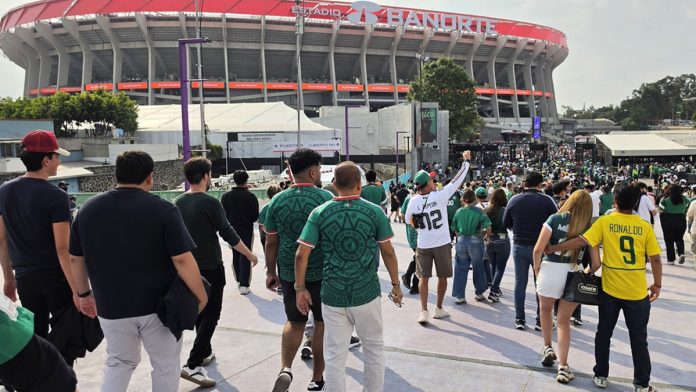
It would be easy to point to the numbers alone as a success story, but the event also served as a shining moment for the Winpot brand. We hosted VIP players at the tournament’s opening match at Estadio Azteca , an initiative that helped us strengthen key relationships that will benefit our long-term business plans.
For us, the true importance of the event lies in the fact that it demonstrated the enormous potential of the Mexican market and the interest of Mexican bettors in sports betting. There is great enthusiasm in the country following the event, and now we must capitalize on that momentum.
SBC Noticias: How did Winpot prepare its technology, sports betting platform, customer service, and promotional strategy for what was expected to be one of the most important betting events in Mexico?
YS: Like most operators, we started planning for this World Cup well in advance. In many ways, it was the biggest test our platform had ever faced, and given the opportunities the tournament offered, we wanted to make sure we were well prepared.
Regarding sports betting, we worked closely with our trading and odds partner to ensure we could meet customer demand in terms of both markets and user experience, while significantly expanding our support capacity to provide better customer service whenever needed.
Promotions were also a key part of our tournament preparation, and we created tournament-specific campaigns aimed at attracting new customers. The goal of these campaigns went beyond simple acquisition; we wanted them to guide new customers toward our broader product offering, with casino promotions integrated into our sports betting options.
Finally, we also consolidated our media strategy with our leading partners such as Fox, Netflix, and Azteca to maximize our potential reach during the tournament.
SBC Noticias: Now that the World Cup is over, do you expect some of the new users acquired during the tournament to remain active, or do you think much of the additional activity was due to the event?
YS: Actually, it’s a combination of both factors. While we’d love to think that all the new customers came to the platform, we’re aware that some of the acquisition was due to the event. However, for me, if we want to consider this World Cup a true success, we need to retain as many of those players as possible, and that’s where my focus is now.
Our top priority for the coming months is retaining these players and, where possible, converting sports bettors into casino players. The initial conversion figures following the tournament are extremely promising, but the coming months will reveal their true potential.
SBC Noticias: There’s an initiative in the Mexican Congress to reform the Federal Law on Games and Raffles that proposes implementing health and risk warnings for operators. Do you think this type of measure could improve player awareness and responsible gambling? What would an effective warning system look like?
YS: These types of measures can be very effective, and we always support any responsible gaming initiative that protects our customers. The industry also benefits from these measures, as they often help players build greater trust in our work.
That said, the impact of any new measure will always depend on its proper implementation. Generic warnings at different points in the player experience have become background noise for most users. The real opportunity lies in a specific and simple intervention that appears in the right context.
This could range from indicating the session duration to notifying customers of particularly large deposits as they occur. These notifications, in addition to helping customers, are also clear signs that operators care about them. Responsible gambling shouldn’t be a mere formality.
It is also essential that operators and regulators collaborate closely on this issue. Ultimately, we all seek the same outcome and must work together to find the best mechanisms to achieve those objectives.
SBC Noticias: The proposal also calls for stricter identity verification controls to prevent minors from accessing gambling products. What additional measures should operators and regulators implement to make age verification more effective?
YS: The most effective measure is to integrate KYC (Know Your Customer) providers with identity and document checks at the time of deposit, not just during registration. Having these checks at different stages of the player experience, especially during deposits, is particularly effective and can help protect minors and vulnerable players.
We also need a better infrastructure for data exchange between payment providers and operators. This would help prevent errors that allow at-risk gamblers and minors to circumvent security systems. We’ve seen this type of data exchange particularly effective in other, more mature markets, and we should try to replicate those results.
SBC Noticias: The proposed reforms would prohibit deceptive advertising and marketing strategies targeting vulnerable users. How concerned are you that stricter advertising restrictions will make it harder for regulated operators to compete with unauthorized platforms that don’t meet the same requirements?
YS: My concern isn’t with the restrictions themselves, but rather that they won’t achieve their objective if they can’t be applied to unauthorized operators. This is a challenge many operators have faced in other regulated markets. They compete on an uneven playing field because regulations are difficult to enforce against foreign competitors.
Ultimately, this does not protect vulnerable users and, in fact, brings them even closer to those who do not meet advertising standards.
If the application of the rules applies equally to all operators, both authorized and unauthorized, then of course I support the protection of players 100 percent.
SBC Noticias: You’ll be speaking at the SBC Summit 2026 in Lisbon on the panel “Mexico Recharged: The Market on the Verge of a Major Reset.” Do you think the country has reached a potential turning point?
YS: Yes, there’s a definite shift in direction in the Mexican market, and the World Cup felt like a pivotal moment. All the market fundamentals are positive: there’s active and steady growth, healthy consumer demand, and strong mobile phone penetration. It’s a maturing market, and if we capitalize on this moment, it could have a very promising future.
What’s happening now is comparable to what we’ve seen in markets like Brazil in recent years. We’re on the path to implementing our own formal regulations, and operators like us, who have been operating here for a long time, are well-positioned to benefit from these changes. We expect that the hard work and investments that operators like us have made in the market will be rewarded when these regulatory changes are implemented.
SBC Noticias: The market is facing rising marketing costs, renewed debates about taxation, and a fragmented payments infrastructure. Which of these issues poses the greatest threat to operators’ margins?
YS: All three impact margins, but payment fragmentation is undoubtedly the most influential factor. Unlike marketing costs and tax policies, planning around these factors is extremely difficult; they have an ongoing impact and lack a defined end date. This also makes budgeting challenging.
This doesn’t mean the other two factors are being underestimated. Marketing cost inflation, which has hovered around 25 percent, is a very real problem, but it’s clear that strong marketing campaigns continue to deliver significant benefits. As for tax policies, it’s often the uncertainty that causes the damage. As long as there are clear figures, the situation is manageable.
SBC Noticias: Should Mexico move towards a more comprehensive licensing framework, designed specifically for online gambling, instead of continuing to regulate online activity through the current framework for land-based casinos?
YS: In short, yes. The current system, created during the era of land-based casinos, is no longer suited to the current context. Online gambling has long since become the dominant sector, and we need a specific regulatory framework that reflects this reality.
While the current system has served its purpose perfectly to date, it will struggle to adapt to modern advancements, player demands, and technological progress. The industry is evolving at a breakneck pace, and if Mexico intends to grow at the same rate as other Latin American markets, it needs regulations that can keep up with these changes.
This also applies to player protection. The current system protects players well, but threats are evolving. We need a robust regulatory framework that is prepared for emerging problems and drives pipeline rates. In recent years, there have been several successful stores in Latin America and North America, and we should use them as a benchmark when redesigning our own systems.
Source: SBC Noticias